
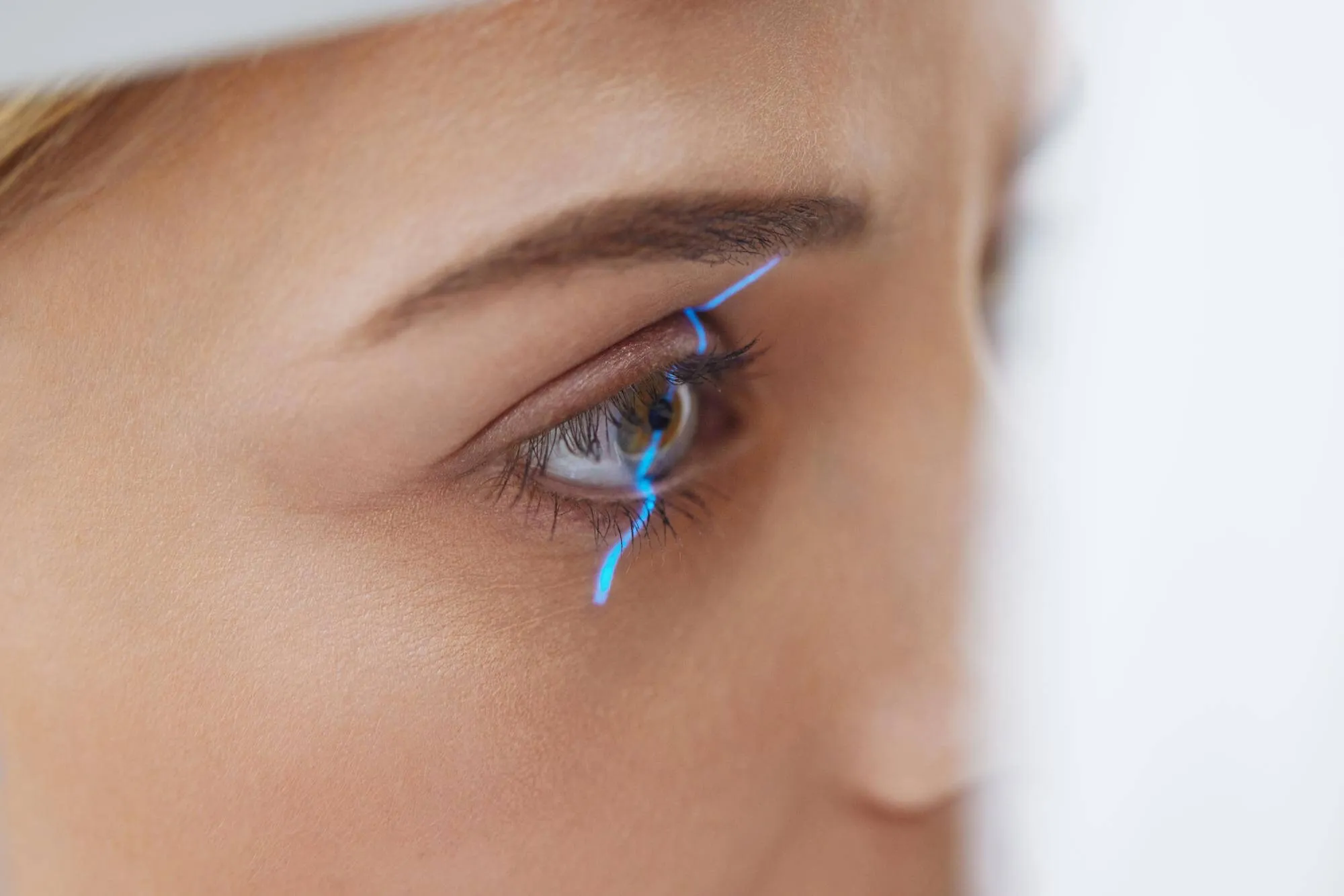
Dry eye is one of the most common eye problems today. It affects both those who spend many hours in front of screens and people with disorders of the Meibomian glands, which are responsible for the lipid layer of the tear film.
In recent years, two treatments have gained prominence due to their effectiveness and non-invasive nature: intense pulsed light (IPL) and eyelid thermotherapy.
Although both treatments seek to improve tear quality and Meibomian gland function, they do not work in exactly the same way. In this guide, we compare both procedures, their benefits, differences, clinical efficacy and when to choose one or the other.
What are IPL and eyelid thermotherapy?
What is intense pulsed light (IPL) applied to dry eye?
IPL (Intense Pulsed Light) is a technology that emits controlled pulses of light onto the skin of the lower eyelid and cheeks.
Initially used in dermatology to treat rosacea or vascular spots, it was discovered that it also improved the symptoms of evaporative dry eye.
In ophthalmology, IPL acts on:
- The abnormal vessels that cause inflammation in the eyelids.
- The Meibomian glands, stimulating their function.
- The reduction of bacteria and Demodex (mites associated with blepharitis).
After applying the light, the specialist usually performs an eyelid massage to promote the expulsion of retained secretions.
What is eyelid thermotherapy and how does it work?
Eyelid thermotherapy involves applying controlled heat to the eyelids to liquefy the sebaceous material that clogs the Meibomian glands.
Unlike IPL, thermotherapy does not use light, but rather regulated temperature and pressure.
There are several devices (such as LipiFlow®, MiBoFlo®, EyePeace®) that apply heat from inside or outside the eyelid, maintaining a constant temperature between 40°C and 45°C, sufficient to melt hardened lipids without damaging the tissues.
Both treatments have the same goal: to improve tear quality and relieve dry eye symptoms, but through different mechanisms.
Similarities between IPL and eyelid thermotherapy
Both IPL and eyelid thermotherapy:
- Improve the function of the Meibomian glands.
- Increase the stability of the tear film.
- Reduce eyelid inflammation.
- Are non-invasive, outpatient treatments.
- Require multiple sessions (usually between 3 and 4).
Both techniques are indicated in patients with:
- Evaporative dry eye.
- Meibomian gland dysfunction (MGD).
- Chronic blepharitis or recurrent eyelid inflammation.
Key differences between IPL and eyelid thermotherapy
| Aspect | IPL (Intense Pulsed Light) | Eyelid Thermotherapy |
| Mechanism of action | Light pulses that heat tissue and improve circulation and inflammation. | Direct heat and pressure on the eyelids to unblock glands. |
| Scientific evidence | High, with clinical studies published in Elsevier and AAO. | Moderate, with proven efficacy in Meibomian gland dysfunction. |
| Sensations during treatment | Mild itching or heat; not painful. | Sensation of deep heat and mild pressure. |
| Duration of effect | Visible improvement after 3–4 sessions; maintenance every 6–12 months. | Progressive results; maintenance sessions every 6 months. |
| Additional indications | Ideal in cases of ocular rosacea or vascular inflammation. | Recommended for severe gland obstruction. |
| Application time | 15–20 minutes. | 12–15 minutes. |
| Approximate price | €150 per session | €95 per session |
Mechanism of action and depth
IPL acts from the outside, stimulating tissues through light pulses and reaching vascular structures that thermotherapy does not address.
Thermotherapy, on the other hand, acts directly on the glands, making it more effective at unblocking them.
Clinical efficacy and duration
Several clinical studies confirm that IPL improves tear quality and reduces inflammation.
Thermotherapy shows good results in patients with severe obstruction, although it may require more frequent sessions.
Comfort and side effects
Both treatments are well tolerated. IPL may cause temporary mild redness. Thermotherapy may cause a sensation of heat or pressure, without lasting discomfort.
Number of sessions and maintenance
Three to four initial sessions are normally recommended, followed by six-monthly or annual maintenance sessions depending on the patient’s response.
Scientific evidence and medical support
Studies on IPL
IPL has been extensively researched in recent years. Peer-reviewed publications demonstrate:
- Increased tear break-up time (TBUT).
- Reduction in inflammation and eyelid telangiectasia.
- Subjective improvement in symptoms (stinging, blurred vision, burning).
According to the American Academy of Ophthalmology (AAO), IPL represents one of the most promising options for dry eye associated with rosacea or mild-moderate DGM.
(H3) Evidence on eyelid thermotherapy
Clinical studies show that the application of controlled heat liquefies lipid secretions, improves glandular drainage and restores meibomian function.
Technologies such as LipiFlow® have been clinically validated for over a decade.
Current limitations
Although both techniques show good results, their effectiveness depends on the degree of involvement and the patient’s profile. They are not a substitute for eyelid hygiene or the daily care recommended by a specialist.
Which treatment is best depending on the type of patient?
- Patients with ocular rosacea or vascular inflammation: IPL is preferable due to its photothermal effect on dilated vessels.
- Patients with severe obstruction or dense secretions: thermotherapy offers better results by acting directly on the glands.
- Mixed or refractory cases: in some protocols, both treatments can be complementary, combining IPL to control inflammation and thermotherapy to unblock the glands.
The final choice should be made after a personalised ophthalmological assessment, considering the type of dry eye, skin history and patient expectations.
Aftercare and recommendations
After either treatment, we recommend:
- Maintaining daily eyelid hygiene with specific wipes or foams.
- Applying preservative-free artificial tears.
- Avoiding makeup on the eyelids for 24 hours.
- Reducing prolonged exposure to screens and dry environments.
- Following the check-ups scheduled by the specialist.
Consistent care is key to maintaining long-term results.
Conclusions: how to choose between IPL and eyelid thermotherapy
IPL and eyelid thermotherapy are two advanced, safe and effective therapies for treating evaporative dry eye.
Although they share the same objective, they differ in their mechanism of action and in the type of patient for whom they are most beneficial.
In general terms:
- IPL: ideal for controlling inflammation and improving glandular function in mild cases or cases of ocular rosacea.
- Thermotherapy: more suitable for unblocking glands in moderate or severe cases.
Both can coexist within a comprehensive treatment plan that includes eyelid hygiene, eye moisturising and regular check-ups by a specialist.
Frequently asked questions (FAQ)
How long does the effect of IPL for dry eye last?
Between 6 and 12 months, depending on the severity of the case and the patient’s habits. Annual maintenance is recommended.
Does eyelid thermotherapy hurt?
No. It produces a sensation of heat, but the treatment is comfortable and non-invasive.
Can I combine IPL and thermotherapy?
Yes, under medical supervision. In some cases, both treatments are alternated to achieve a more complete effect.
How many sessions do I need?
Generally 3 or 4 initial sessions, followed by maintenance every 6–12 months.
Do these treatments replace artificial tears?
No, but they can reduce the need for them by improving the natural function of the tear glands.


