
When it comes to leaving behind glasses or contact lenses, there are several surgical options with excellent results. The most common ones are Lasik, PRK, and ICL lenses. But how do they differ? Which one is safer? Which one is best suited for your eyes?
In this article, we will simply explain the main differences between Lasik, PRK, and ICL, so you can make an informed decision together with your ophthalmologist.
What is Lasik?
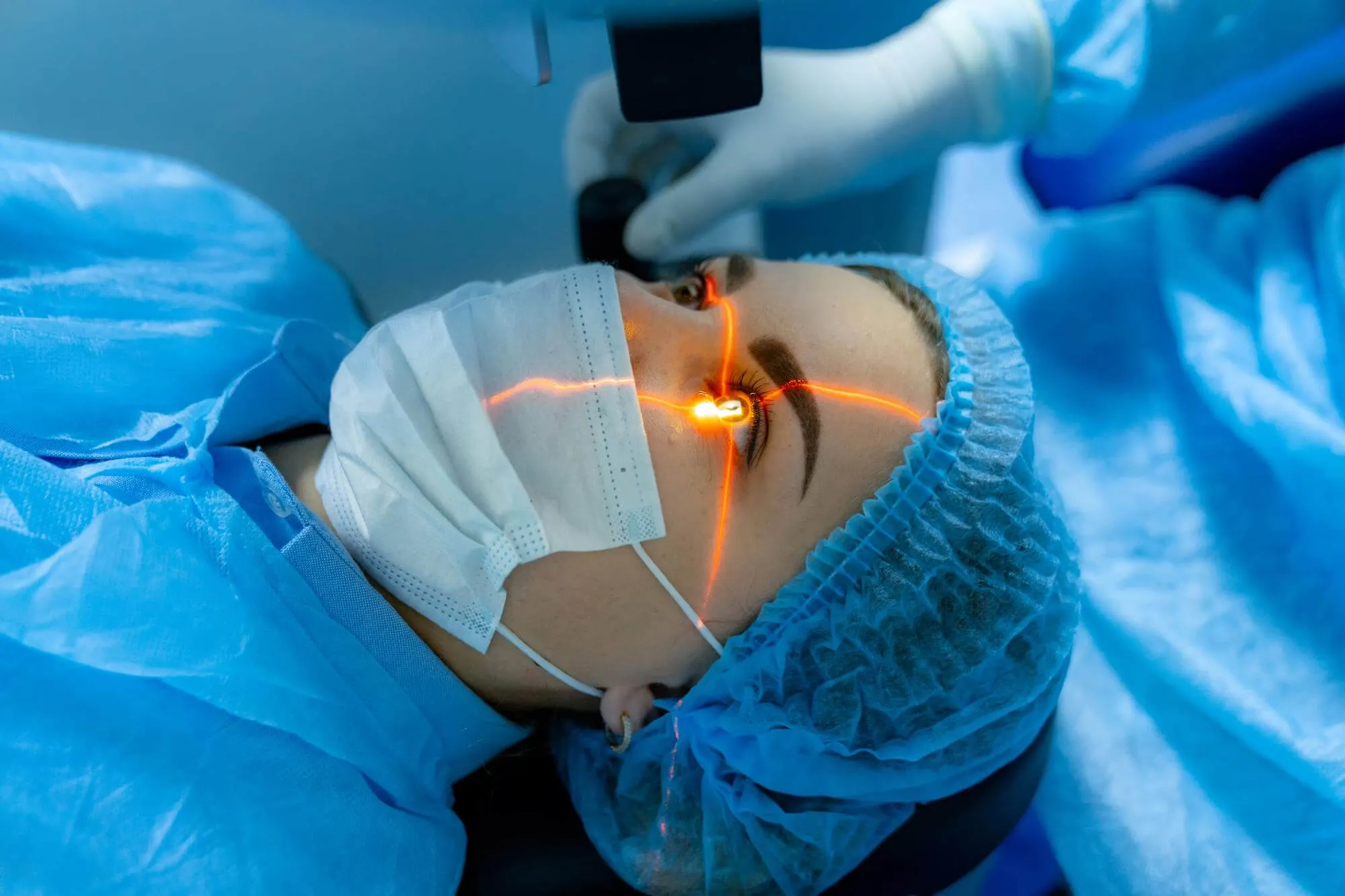
Lasik (Laser-Assisted in Situ Keratomileusis) is one of the most popular refractive surgery techniques. It is used to correct myopia, hyperopia, and astigmatism.
How does it work?
A small cut is made on the surface of the cornea to lift a thin layer (called a “flap”). Then, an excimer laser reshapes the cornea, and the flap is repositioned without the need for stitches.
Advantages of Lasik:
- Fast visual recovery (in 24-48 hours).
- Little to no discomfort after surgery.
- Stable and precise results.
Limitations:
- Not suitable for very thin corneas.
- Not recommended for those with severe dry eye.

What is PRK?
PRK (Photorefractive Keratectomy) was the first laser technique developed for vision correction. Although it is less common than Lasik today, it remains useful in certain cases.
How does it work?
Instead of creating a flap, the outermost layer of the cornea (epithelium) is removed, and then the laser is applied to reshape the cornea.
Advantages of PRK:
- Ideal for thin corneas or patients at risk of eye trauma.
- No corneal cut (flap), eliminating that postoperative risk.
Limitations:
- Slower visual recovery (can take several days).
- More discomfort in the first few days.
What are ICL lenses?
ICL lenses (Implantable Collamer Lens) are a completely different option. The cornea is not modified; instead, an artificial lens is implanted between the iris and the crystalline lens.
How does it work?
It is a reversible technique, especially recommended for patients with high myopia or corneas unsuitable for laser treatment.
Advantages of ICL lenses:
- Excellent visual quality even at very high prescriptions.
- Reversible technique: the lens can be removed if necessary.
- The cornea remains unchanged.
Limitations:
- Intraocular procedure (more invasive than laser surgery).
- Requires more postoperative check-ups.
- Higher cost.
So… what is the best option?
There is no universally “best” technique, only the one that is best suited for your specific case. Some key factors your surgeon will evaluate with you:
- Your age and lifestyle.
- The thickness and shape of your cornea.
- Your prescription.
- Your overall eye health.
At our eye surgery clinic in Barcelona, we conduct a comprehensive personalized study to recommend the safest and most effective option for you.
Want to know which technique is ideal for you?
Visit us and get expert advice from our team. In less than an hour, you will know if you are a candidate for Lasik, PRK, or ICL lenses.


