
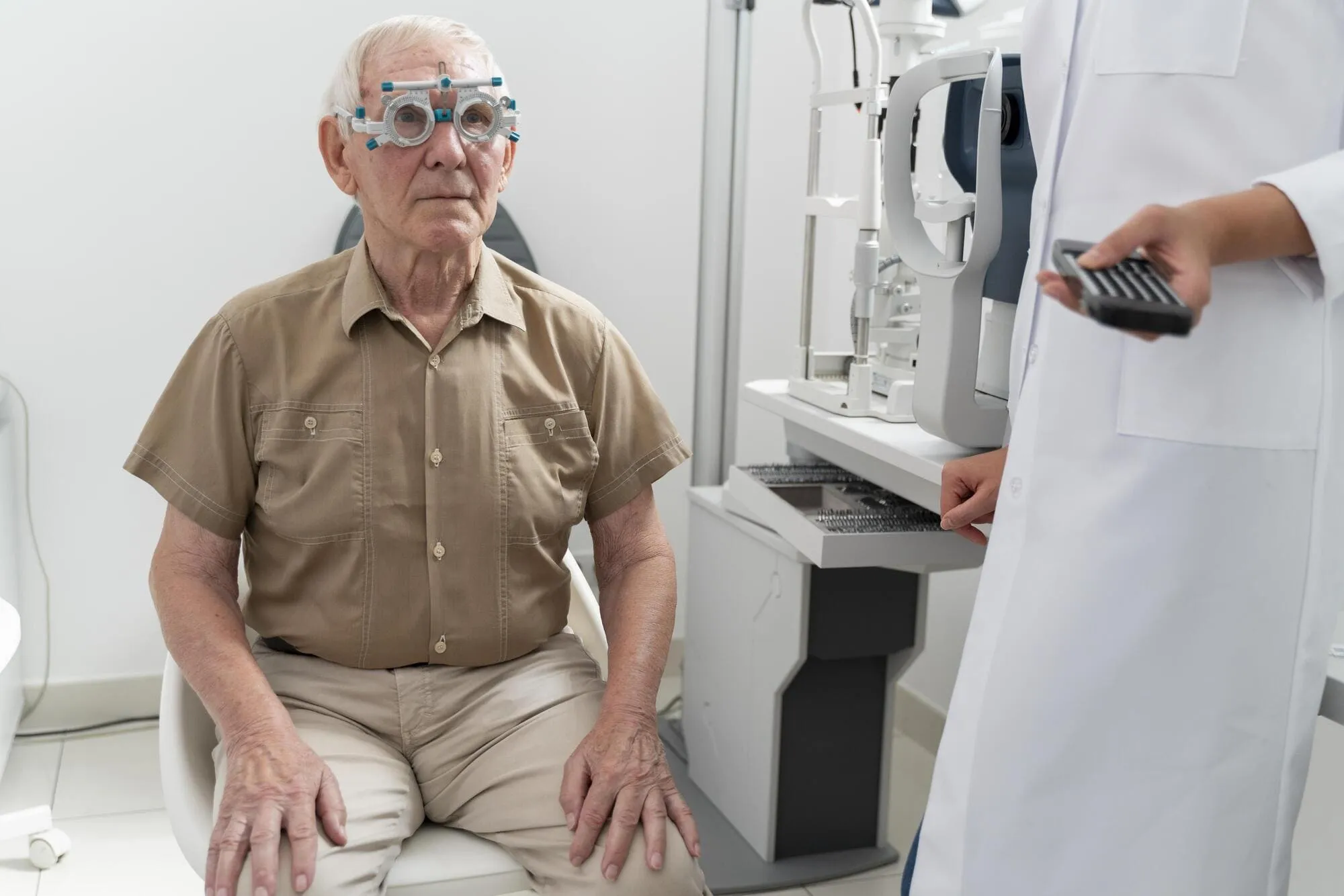
Cataracts are one of the main causes of vision loss in the elderly, but the truth is that their treatment is very effective. Cataract surgery is a quick and safe procedure with a high success rate. However, many people wonder: when is it really necessary to undergo surgery? In this article, we clarify all the frequent doubts about the best time to make this decision.
How do you know when to operate on cataracts?
Many people live with cataracts for years without major problems. But there comes a point when its progression interferes with daily life. These are the clearest signs that it is time to consider surgery:
Your blurred vision interferes with daily tasks
If you can no longer read clearly, drive, watch TV or recognize faces, it is a clear sign that the cataract is affecting your quality of life.
You feel glare or halos when looking at lights.
Car headlights at night, sunlight or even an ordinary lamp can become annoying. This symptom is very frequent and can represent a danger, especially when driving.
You need to change graduation frequently
If you have changed glasses several times in a short period of time and your vision continues to worsen, it is probably not a refractive problem, but a developing cataract.
You see dull or yellowish colors
Cataracts can affect color perception, making everything appear darker or sepia-toned.
You have double vision in only one eye
Although less common, this symptom may also indicate significant cataract progression.
What happens if you have cataracts and do not have surgery?
If not treated in time, cataracts get progressively worse. Some consequences of not having surgery include:
- Irreversible vision loss in advanced stages.
- Increased risk of falls and accidents.
- Limitation in daily activities.
- In very advanced cases, the cataract may harden, making surgery more complex and risky.
Not having surgery is not dangerous in itself at the beginning, but waiting too long can
What is the maximum age for cataract surgery?
One of the most frequently asked questions is whether there is a maximum age for cataract surgery. The answer is clear: There is no maximum age for cataract surgery.
People 85, 90 or even older can undergo surgery as long as:
- Are in good general health.
- Do not present serious medical risks.
- Can cooperate with instructions during surgery (such as keeping your head still).
The operation is performed under local anesthesia and takes less than 30 minutes. It is ambulatory, painless and with a success rate of more than 95%.
What is cataract surgery like?
The most widely used technique today is phacoemulsification, which consists of:
- Make a small incision in the eye.
- Fragment the opaque lens with ultrasound.
- Remove the debris.
- Implant an intraocular lens (IOL) that replaces the crystalline lens.
The procedure does not require stitches and recovery is usually very quick. Within a few days, many patients notice a significant improvement in their vision.
What happens after the operation?
After cataract surgery:
- You should use eye drops to avoid infections and inflammation.
- Avoid physical efforts and rubbing your eyes.
- You do not need hospitalization or absolute rest.
- Most people recover their vision in 24 to 72 hours.
Conclusion
Cataract surgery is one of the safest and most effective surgeries in ophthalmology. It is not done because of age, but because of visual need. If you or a loved one is experiencing blurred vision, difficulty performing daily tasks or decreased quality of life, it is best to see an ophthalmologist for an evaluation. Remember: early cataract surgery can restore visual clarity and significantly improve your daily life.


